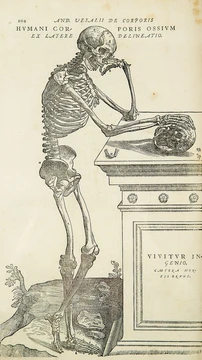
Animal Anatomy 1-17
17 entries in the Animal Anatomy compendium.
AbdomenThe abdomen contains digestive organs and core muscles.Adrenal glandEndocrine glands producing hormones for stress, metabolism, and salt balance.ArteryBlood vessel carrying blood away from the heart.BladderHollow organ storing urine from the kidneys of vertebrates.BoneBones are rigid organs forming the vertebrate skeleton.BrainCentral organ of the nervous system in vertebrates and most invertebrates.BrainstemPosterior brain part connecting cerebrum to spinal cord.CapillarySmallest blood vessels enabling nutrient and waste exchange.CartilageResilient connective tissue covering joints and supporting body structures.Cell (biology)The fundamental unit of all known life.Cell membraneSemipermeable lipid bilayer separating cell interior from environment.Cell nucleusMembrane-bound organelle containing the cell's genome.Central nervous systemCentral nervous system integrates and coordinates body activity.CerebellumThe cerebellum fine-tunes movement and supports cognitive functions.Cerebral cortexOuter neural layer of the cerebrum, key to higher cognition.CerebrumLargest brain part controlling voluntary actions and higher functions.Circulatory systemA closed network of heart, blood, and vessels.
Browse Animal Anatomy 1-17 in the interactive codex →